Passionate about people sums up Sam Hagger FBII and his Beautiful Pubs Collective. Here he shares his motivation, his achievements and his thoughts on building a successful pub business with BII News Editor Kate Oppenheim, CBII.
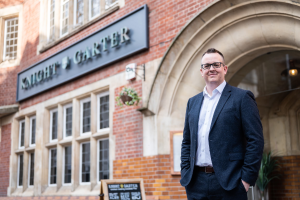
Your people are your greatest ambassadors, so treat them well, says Sam Hagger FBII, who runs the Beautiful Pubs Collective, a Leicestershire based company he founded 15 years ago. Obsessed with the detail and passionate about people, his three site operation is seeing double-digit sales growth against 2019 trading figures. January 2023 alone saw a 7% increase in revenue.
Sam describes himself as a people person and having left corporate life, where he had been a retail manager for Orchid Group and Spirit, he set out to create a business that would welcome all sorts of people into the workplace. “Some of the best people have challenges, whether that’s personal, mental or physical, and in a large corporate environment they often don’t fit. I don’t believe there are barriers to stop employing anyone” says Sam, who employs 90 people currently. It’s the people who make Beautiful Pubs and help us to achieve the high standards we offer.
“Our job is to give our people everything they need to be successful” says Sam, who also owns Beautiful Ventures, a collaborative consultancy business, which puts him in contact with businesses with operation challenges. “Wherever we see a higher staff turnover it’s because the team has not been set up for success. It becomes like Groundhog Day – the same things going wrong because nothing changes. When you remove the roadblocks, you’ll find people will be happy, will want to stay and normally thrive.”
He continues: “There is always natural churn in any business, but that churn should not be related to people being unhappy, but down to life changes – people going to university, or relocating and so on. Sometimes it could be because you just haven’t got the next step in their professional development, and they need to leave to find their next opportunity.”
“You should have open and honest conversations with your team. If they love their job, they will sometimes wait for the next opportunity, but if they’re super ambitious, they will leave, but frequently, they come back to us. They often realise that they don’t get the same employee experience working for someone else.”
Sam says it’s a full-time task looking at each role in the business and asking yourself how to make sure they can achieve a work-life balance and not have a recurring bad day. It’s not just about hours either, says Sam.
“I’ve found that where chefs are put onto a four-day week, you often find them working in someone else’s business on the fifth day. It’s about listening to what they want to achieve in their life. Every week I get our whole businesses rota and make sure that we haven’t missed anything. For instance, whether they are part-time, work five days or juts a few hours a week, I make sure they get a mix of nights and days. If people always end up working weekends or evenings, it infects their love of the job. Post-pandemic, people miss being able to have dinner time with the family, for instance.”
Being team focused is expensive , he admits, “but I see it as an investment in the future of our business and indeed our industry.”
The company, he explains, spends markedly less on recruitment than the average business and it never uses an employment agency. Six years ago, he took on a full-time Operations Manager for People & Experiences, Rose, who had previously managed sites for Peach Pub Company, Handmade Burger and Boost Juice.
“In any year, if you lose a head chef, times that by three sites, that’s £10-£15,000 in recruitment costs. We always work hard to make sure we have a succession plan. Six years ago, I regularly used to have feelings of isolation and fear, asking myself what happens if someone leaves. But I’ve found that where people are happy, they stay for longer. We’ve currently got three sous chefs all ready to move up to become head chefs. We have created roles, like senior sous chef, so it’s clear who will get to move up first” says Sam.
Avoiding what he calls the battlefield hires is key, “Knee jerk recruitment and promotion decisions don’t equip people for their next step. You are setting them up for failure.”
Again, having honest conversations about people’s skillsets and ambitions is key. “If someone says they want to be a head chef in 12-months, but you know they lack the skill, be truthful and tell them realistically where you believe they are and how much they have to learn. Then set realistic expectations and help them reach their goals.
“I tell people they can be whatever they want to be, but it has to be in the right time. It might be a KP wanting to be a head chef, or an assistant manager who wants to be a really good stock auditor. Ask yourself, how can you help them.”
Building opportunities
If you are based in a town or city with lots of students, it’s important to understand what they may be looking for, in terms of hours, holidays, etc. Build employment around their needs. Sam explains “We have got three students currently doing degrees who have progressed into supervisor roles. They are passionate about their jobs and hungry for success. When they complete their degrees, they will look at entry level jobs earning £23,000 a year, for instance, when they can walk into a trainee assistant manager’s position in a pub on £26,000.”
Show the value of hospitality, he suggests. “There are so many transferable skills that people gain while working in hospitality. Soft skills like customer service, as well as learning about administration and so on. These are useful skills and it hurt anyone’s CV to show they’ve worked in hospitality.”