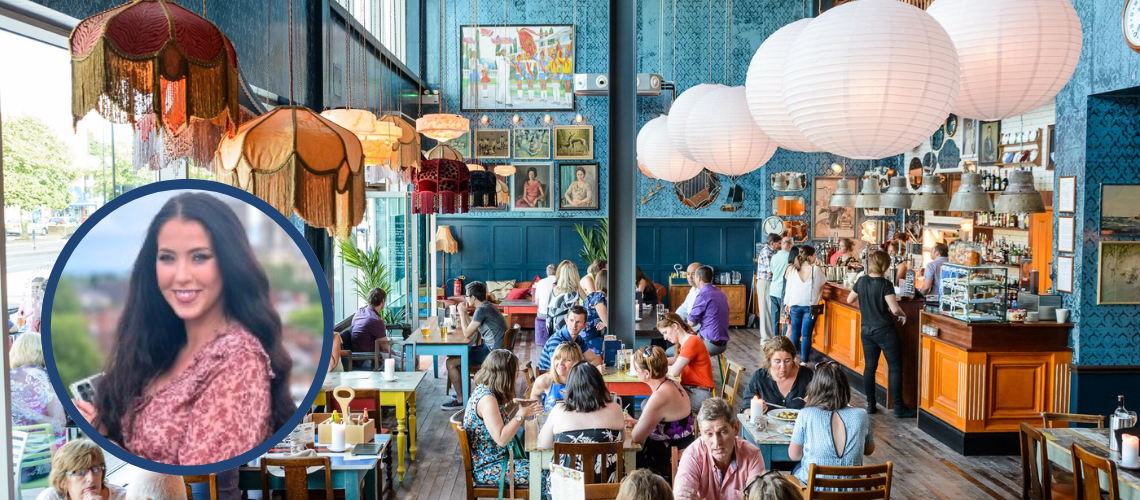
A champion of diversity in the workplace, Vanessa D’Souza’s day job is in commercial compliance at TNT Sport, but she’s best known for being a MasterChef semi-finalist, the much celebrated The Autistic Chef™, and as a Celebrity Ambassador for the National Autistic Society. Here she speaks to BII News’ Editor Kate Oppenheim CBII about why embracing difference is crucial in creating a better business environment
“I think the concern is often about the fear of the unknown and not having the knowledge or experience”
Why does having a diverse workforce that includes neurodiverse people on your team matter?
It matters both from a hospitality business perspective and also from a customer viewpoint. Speaking as someone who was diagnosed with autism, ADHD and sensory disorder late in life, hospitality needs to be more accepting and accommodating for people who are neurodivergent. I’d had 35 years of trying to navigate how my brain was different and why I struggled in so many situations that others found normal before I understood why.
Hospitality is one of the most difficult sectors to work in if you’re neurodivergent, because shifts vary and there are many sensory issues, yet it’s the industry that’s most likely to attract us, because if you’re ADHD like me, you’re going to love working in a kitchen environment that keeps you grounded with regular tasks, but also gives you lots of new things to keep you entertained.
Having neurodiverse people with various skills sets and different strengths on your team really matters. Everyone’s brain works differently and having people who come at an issue from a different angle, or who see things in another way, is a good thing.
And they are more likely to be able to accommodate a neurodivergent customer’s needs, either as an individual or as a parent of an autistic child. People need to be acknowledged and accommodated; being offered somewhere to sit that’s quieter or having sensory safe meals, where chefs will deconstruct dishes. I still find it difficult in a restaurant to say, when ordering, ‘actually, could the sticky toffee pudding come with the sauce and ice cream served separately?’. But something as simple as pouring the sauce over the pudding with the ice cream melting on top could cause distress for someone who is neurodivergent.
How can pubs be more inclusive and better able to welcome people with different skill sets?
If you’re serious about employing a diverse team, you need to advertise the jobs in places where neurodivergent and disabled people will be looking. There’s no point in just putting ads on the standard jobs’ boards, instead use something like Evenbreak, a jobs’ board for disabled candidates.
It’s good to say on any ads that you welcome applications from people who are neurodivergent or disabled, but only if you can accommodate them. There’s no point otherwise and it becomes meaningless.
Wording matters: if a job ad is text heavy, you’ll lose someone with ADHD or who is dyslexic. Keep it short, use bullet points and keep to the essential information. Ask yourself, is your application process accessible to everyone, or is it more complex, eg, requires someone to upload their CV to a foreign web portal?
Does your recruitment process insist on face-to-face interviews?
This can be hard for someone entering a new space and process all alone and additional support may be needed. There’s a lot of debate around what is reasonable for people to expect and to ask for and what is not. But if someone would feel better having the questions in advance, then it’s not about whether that gives them an unfair advantage over someone else, but about giving a neurodivergent or disabled person the chance to be interviewed at their best.
What would you say to employers who are reluctant or unwilling to bring someone neurodivergent onto the team?
I think the concern is often about the fear of the unknown and not having the knowledge or experience. Having a neurodiverse workforce is so positive – MI5 is known for actively recruiting neurodivergent people, because they need employees who think outside of the box.
Diversity in the workplace makes for a better team. Being different shouldn’t be seen as a negative, but instead we should celebrate the fact that we are all unique, it’s just that some share more similar traits than others. Having a team with different views and mindsets in a hospitality environment means that customers are better represented too.
You have spoken a lot about masking and repressing your autistic self, and I suspect there are many people working in pubs today doing exactly that. How can an employer seek to gain their confidence and support them better?
Ironically, people only mask when they feel an environment is not safe enough for them to be themselves, so it’s about creating a safe space. It is about asking what you can do as their manager or boss to help that person do their job well. They might need adjustments to be made, but asking ‘what can I do?’ is a great first step.
Providing somewhere, not the main staff room, where people can go to be alone, to decompress and be themselves is important. Being flexible and more understanding is key.
Again, asking ‘is there anything I can do to help you thrive in this role?’ is crucial. Ask about adjustments they might need – if they chose not to say, that’s fine. The onus is on them to say what they need.
Have you any tips to help licensees grasp this opportunity and move forward with confidence?
Having awareness and being accepting of someone who is neurodivergent or with a disability is important – and I should say that not everyone who is neurodivergent sees themselves as being disabled.
Undertake training for yourself and for your staff, so you can put measures in place that you understand and will support someone.
Using visual schedules, for instance, can work really well, especially if they’re dyslexic. It’s about giving people a choice of, say, written or visual information. I’ve a photographic memory, so a pictured schedule stays in my brain, but some work better from text. Remember, that for a chef who has dyslexia or with dyscalculia, the menu ordering or using an Excel spreadsheet can be a minefield.
It’s like anything in life, the best ideas come from deviating away from the routine and doing things differently – it could be a changing menu or something else that will see the birth of something wonderful in your business.
FOR MORE INFORMATION ON VANESSA D’SOUZA go to her The Autistic Chef™ website at https://vanessadsouza.co.uk