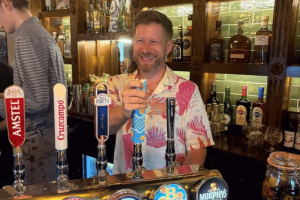
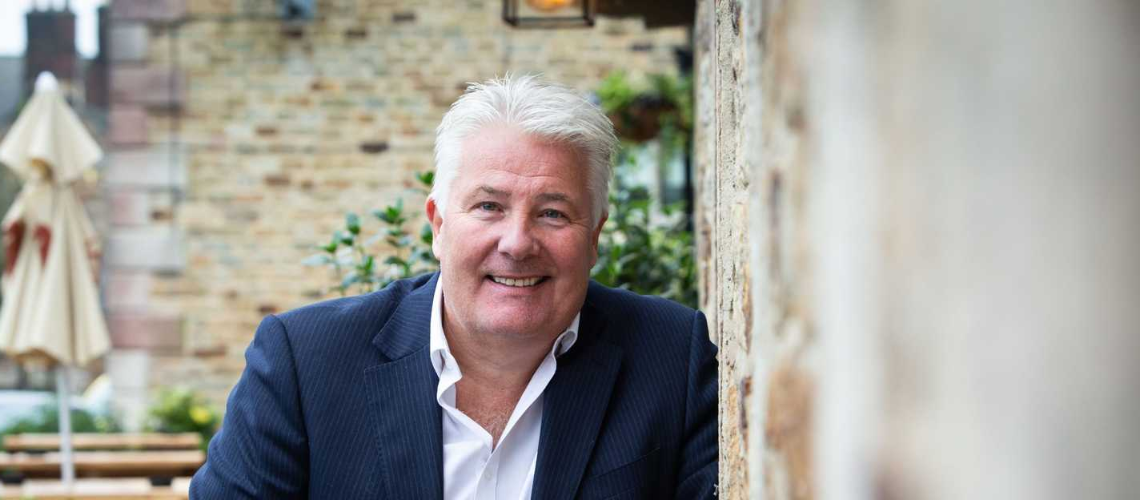
For Tim Skinner FBII, social media is the shop window of The Devonshire Arms in Marylebone, Central London, but it was his much-loved pub dog Ted who proved that personality, rather than promotion, is what really gets people engaging.
When Tim Skinner FBII took on The Devonshire Arms in Marylebone, he was effectively starting its social-media presence from scratch. Today, the little 38-seat pub can clock up more than 200,000 views in a month, reaching an audience that extends well beyond its regular customers. But Tim’s approach has never been about aggressively selling the pub. Instead, he wants its social channels to provide a glimpse through the door. “I’ve always thought about social media as your shop window,” he says.
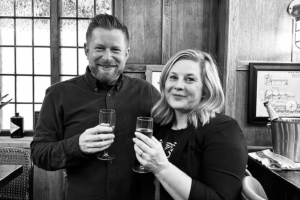
“I like people to get a sense of what you’re about. The posts should give people an indication of the real stuff that’s going on — almost like a storyboard.” It’s an approach that has evolved organically. Tim didn’t even have a personal social media account until lockdown. At a previous pub in Sussex, however, he worked with Debbie, who initially joined part-time, but ended up running the pub’s events and social media.
When Tim moved to The Devonshire, he asked her to work with him again. “We’ve worked together for 10 years and she gets my tone of voice,” he says, explaining that she now runs a successful agency (@thesocialstylist) working with independent businesses. “I could write something or she could write something and it just feels like the pub.” It remains a collaborative affair. The team has a WhatsApp group where ideas and pictures are shared, and sometimes Tim and Debbie will message one another at virtually the same moment with the same idea.
Making it personal
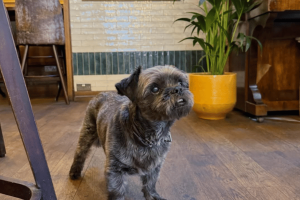
The Devonshire, a franchised managed partnership with Star Pubs, has developed an online personality that portrays s it as an independent, individual pub. “We’re not corporate,” he says. “Working with Star in Marylebone was very much about it being Tim and Ted’s pub and keeping that independent feeling.” Ted was a “JackShit”, says Tim, a Jack Russell-Shih Tzu cross and, for years, an integral part of both his pubs and their social-media presence.
Ted entered Tim’s life in 2012, when Tim was running the Three Crowns in Sussex. A couple who had become regular diners while having their kitchen refurbished invited him to dinner — and introduced Tim to their litter of puppies. One puppy spent much of the evening sitting on Tim’s lap. The following morning, he received an email — supposedly from Ted — saying how lovely it had been to meet him and asking if he could come and live with him.
Tim initially resisted. Pub hours hardly seemed compatible with training a puppy. But his friends had other ideas and one Saturday arrived at the pub with Ted — and left him there. “He chose me; I didn’t choose him,” laughs Tim. “But it worked out brilliantly. He understood the assignment from day one.” Ted rapidly became part of pub life. He instinctively knew how to work a room, making friends without appearing to beg and somehow identifying the table most likely to produce a treat. Children loved him, other dogs loved him and customers started coming specifically to see him.
When Tim move to The Devonshire, Ted naturally came too. By then an older dog, the slightly slower pace suited him, although the absence of a kitchen was, jokes Tim, something of a disappointment. His bed sat under the desk in the bar and Ted would often sunbathe in the doorway, a handy position to escort customers inside and walk them to their seats. Unsurprisingly, he became social media gold.
Pub Dog Ted
Ted had his own Instagram account, Pub Dog Ted, which Tim had originally started in Sussex and revived in London. The content became more intentional, combining pictures and stories of Ted in the pub with glimpses of his adventures away from it. The account attracted a dedicated following of almost 500 people, while Ted also appeared regularly on The Devonshire’s channels. “People really liked it,” says Tim. “People love dogs.”
There was plenty to post. Ted joined a Pride march with a rainbow flag, went to events and even became a mascot for the crew of a TV pilot filmed in Scotland. Tim recalls him once ending up on Gary Lineker’s lap at an event. One of the best examples of Ted’s social-media pulling power came at a wedding at The Devonshire. Tim filmed a Reel featuring the bride and groom dancing with a band playing behind them — but focused the video on Ted enjoying a belly rub. The response was huge. And that experience reinforced something Tim had already noticed. “You can do a post about an amazing event and then, the minute you put a picture of a dog up, people go wild,” he says. “They like the more personal stuff.”
That personal connection became particularly apparent when Ted died, aged 14. Tim posted the news on Ted’s Instagram after telling those closest to him. “I was an absolute mess doing it, but I wanted to tell the story of his life.” The response was extraordinary. The post received around 16,500 views, 615 likes and 61 shares, while messages, cards, flowers and gifts arrived from people whose lives Ted had touched. One email came from a woman in America whom Tim had never met. She had encountered Ted sitting in the pub doorway during a visit to London and he had made such an impression that she subsequently went out of her way to visit him whenever she returned to the capital.
Guests still come into The Devonshire and ask after him. And his bed remains under the desk in the bar.
Showing the social side of the pub
Ted’s success encapsulates Tim’s wider philosophy about social media: show people how a pub feels rather than simply telling them what it sells.
The Devonshire’s content is deliberately mixed — guests, dogs, weddings, events, stories from the pub and the occasional product post — without becoming overtly sales-driven. That matters for a small Marylebone pub that doesn’t serve food or offer music and whose guest base changes dramatically through the week. Office workers dominate weekdays, while weekends bring tourists, shoppers, hotel guests and people heading to dinner or the theatre. Social media gives each of those audiences a taste of the experience before they arrive.
Starting from zero, Tim says The Devonshire has built around 12,000 followers, while its content can regularly generate more than 200,000 monthly views, including substantial reach among non-followers. For Tim, however, the lesson isn’t to obsess over the numbers. It is to be authentic. “Hospitality is looking after other people,” he says. For Tim, however, the lesson isn’t to obsess over the numbers. It is to be authentic. “Hospitality is looking after other people,” he says.
And that translates neatly to social media. The best posts aren’t necessarily the most polished or promotional. They are the moments that reveal the people, stories and characters behind the business. For many years at The Devonshire, the character who did that better than anyone had four legs and answered to Ted.