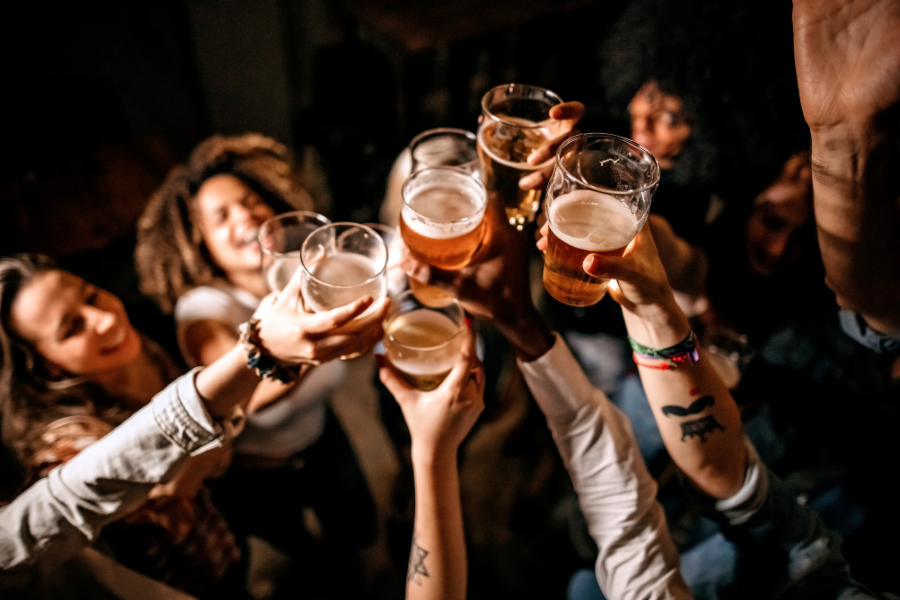
LUKE BOASE: Humans have spent thousands of years forming social occasions around alcohol: from how we toast success with a glass of Champagne, all the way back to the festivals of drunkenness in Egypt. In 2024, the great British pub is a world-famous institution with our ‘locals’ an integral part of communities up-and- down the country. And even as attitudes towards drinking change, we believe the role of the pub and the pint remains as important as ever.
Lucky Saint was founded with the ambition to reward those who aren’t drinking, with the beer they deserve. The idea was simple: brew an alcohol free beer that was good enough to get me drinking it; and build a brand that people would feel proud to order at the bar. Five-and-a-half years later, Lucky Saint is stocked in 10,000 on-trade venues, including 1,000 pubs pouring it on draught, some casual dining favourites, such as Honest Burgers and Pizza Pilgrims, and 78 Michelin-star restaurants.
We have so much love and respect for our hospitality sector, it’s an honour to be a part of it – and if we can play a positive role, then so much the better.
EMMA HEAL: What has been fascinating to see is how drinking habits are evolving. In 2024, three out-of-four people in the UK are actively moderating their alcohol consumption. It’s no longer something people engage with for Dry January or as the designated driver: it’s now a year-round behaviour.
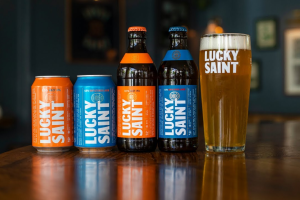
Last summer in the UK, total alcohol-free beer consumption beat January’s for the first time, and we expect to see the same this year. All age groups are moderating their alcohol intake, as people focus on having healthier lifestyles.
LUKE: We’re also seeing more and more ‘zebra striping’, the practice that sees people alternating between alcoholic and alcohol-free drinks within a single visit to the pub. The recent KAM Low & No report found a quarter of the UK are ‘zebra striping’, as the way people moderate evolves. By providing great tasting, quality alcohol-free drinks, we can provide options which cater to everyone and serves to extend the dwell time of pub customers.
EMMA: A huge part of this change is in the role draught is playing in pubs. Alcohol-free beer is a category which historically has only ever been served in a bottle. When an alcohol-free beer is served in the exact same way as the other beers in the pub, in a pint glass, that’s when all beers become equal. For pub goers who are choosing alcohol-free on that occasion, they feel a part of the round and it’s no longer something they are ordering under their breath at the bar. Matching the experience and quality you get with your pint is so important. We’re proud to be pouring on draught in pubs up and down the country, and providing that social experience for people.
Another trend we’re seeing more and more is how the non-drinker often decides where a group goes: 65% of UK adults say non-drinkers in their group influence the choice of venue, in the same way that someone who may be vegetarian or has a specific dietary requirement would steer the choice of restaurant. We know that one-in-three pub visits are alcohol-free, and there’s a real case for making sure venues cater to different types of consumers and ensure that they’re not losing out on the spend of an entire group due to a poor alcohol-free offering.
LUKE: After five years as a single product business, we’re excited to launch our Hazy IPA alongside the Unfiltered Lager. Customers and consumers have been asking us constantly when we would be launching one, so we felt the time was right. For us, it speaks to where the alcohol free category has got to.
Drinkers aren’t asking for alcohol-free ‘beers’ when they’re ordering, they want different beer styles in much the same way they do with full strength equivalents. We wanted to bring a quality alcohol-free Hazy IPA to a wider audience of drinkers and have been thrilled with the reaction to it so far.
Looking ahead, we’re also excited about how the new Government can support the alcohol-free category. Last year, a public consultation was launched looking at ways to make alternatives to alcoholic drinks more widely available and, in turn, increase participation in the no and low category.
EMMA: We’re already seeing the hugely positive impact alcohol-free drinks are having on people and the role it can play within pubs. So, clearing up the confusion around the definitions of the category will help accelerate that positive impact.
There is a huge potential for growth. Currently, alcohol-free beer sales in the UK account for around 1% of total beer sold, whereas in Spain it’s at 17%. And other European counterparts, like Germany and Sweden, are seeing non-alcohol beer sales in double digits. The appetite is there, and it shows what is possible in this country. Something I’m passionate about is championing small businesses (99.9% of UK businesses are small).
I sit on the Family Businesses and Independents (FBI) forum, as part of the Hospitality Sector Council. Hospitality is the UK’s 3rd largest employer and I’m proud in my role to represent the two-thirds of UK hospitality which is independent, taking the views and concerns through to the Minister for Hospitality. It’s important that we continue to recognise the challenges the industry is facing, and work on tangible solutions over the coming years.
In June, I was honoured to join the board at the British Beer & Pub Association, headed up by CEO Emma McClarkin CBII and Chair Nick Mackenzie.
The BBPA and its membership continue to play a vital role in banging the drum for the beer and pub industry, and highlight the essential role it plays in the towns, cities and the countryside across the UK. With the election results now in, we look forward to working with the new Government.
LUKE: In March 2023 we opened our own pub, The Lucky Saint in Marylebone, London, serving the best of both alcoholic and alcohol-free drinks. Many people have asked if we considered opening an alcohol-free pub, and the answer was a resounding ‘no’. We always wanted to create an inclusive pub, whether you’re drinking or not. As a result, the pub draws a great mix of groups from after-work office drinkers, to birthday celebrations and run clubs looking for a post-run pint. We’ve worked hard on ensuring the range and offering caters to everyone, ‘zebra stripers’ included.
Running our own pub has been an incredible learning experience for us, and it’s the thing that I’m most proud of. We continue to appreciate the expertise and advice provided by those with many more years’ experience! Also of organisations like the BII, which provide invaluable resources for a single site business like ours.
We know that there are real challenges facing businesses, but this is an industry that is resilient and constantly adapting – ensuring it’ll continue to provide great social occasions this year and beyond.